Thinking in Seasons: The Japanese Aesthetic Framework That Replaces 'Fix It' With 'Flow With It'
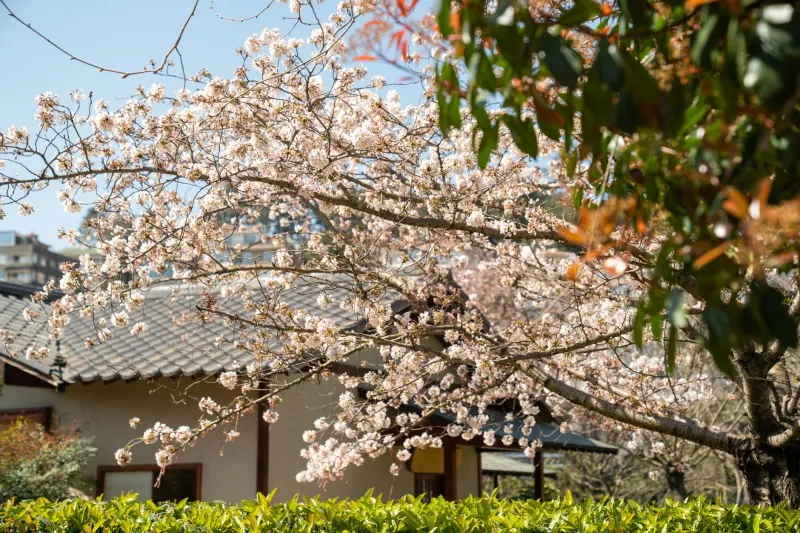
There is a word in Japanese — shizen — that translates roughly as "nature" but carries a weight the English word rarely does. It implies not merely the external world of trees and weather, but an inherent order to things: the idea that living systems have their own logic, their own rhythm, and that wisdom lies in understanding that rhythm rather than overriding it.
This concept sits at the heart of how we approach aesthetic medicine at Aoki Aesthetic Clinic. And it stands in direct contrast to the dominant model most Americans encounter when they walk into a cosmetic practice.
The Problem With the Problem-Solving Model
American cosmetic culture is, by design, solution-oriented. A line appears; it gets filled. Volume recedes; it gets replaced. A texture concern emerges; a device is deployed. Each of these interventions may be technically appropriate in isolation. But the cumulative effect of treating the face as a series of discrete problems — each requiring its own targeted fix — is a face that has been managed rather than understood.
The results are often technically proficient and aesthetically off. Something is preserved that shouldn't be. Something is corrected that was, in fact, a natural expression of the person's particular structure. The face looks worked on because it was worked on, repeatedly, without a governing philosophy.
The season-based framework we practice at Aoki asks a different question from the outset. Not what is wrong with this face right now? but rather where is this face in its natural arc, and how do we support that arc with intelligence?
The Four Seasons of a Face
Japanese aesthetic philosophy draws heavily on the concept of shiki — the four seasons — as a metaphor for natural cycles that are beautiful precisely because they are transient. Cherry blossoms are not failures for falling. Autumn leaves are not problems to be solved.
Applied to the face, this framework recognizes that each decade of life represents a distinct season with its own characteristics, its own particular beauty, and its own appropriate clinical priorities.
The twenties are spring: high cellular turnover, strong collagen architecture, the face at its most structurally resilient. Clinical work in this period, where warranted, is about education and prevention — not intervention for its own sake.
The thirties represent early summer: the face is fully mature, the bone and soft tissue relationship is established, and the first subtle shifts in volume and elasticity are beginning. This is when thoughtful, minimal work yields the greatest long-term return.
The forties and early fifties are late summer into autumn: the structural changes are real and visible, but the face is not in decline — it is in transition. The clinical approach shifts from prevention to harmonization, working with what the face is becoming rather than against it.
The later decades are winter: not a season to be feared or reversed, but one with its own aesthetic logic. The goal is not to restore summer. It is to honor the face that has arrived.
Why Timing Matters More Than Technique
One of the most consequential errors in Western cosmetic practice is treating technique as the primary variable. Clinics compete on the precision of their injectors, the sophistication of their devices, the exclusivity of their protocols. These things matter. But they matter far less than when and why a given treatment is applied.
A filler placed in the wrong season of a face's life does not simply fail to help — it can actively disrupt the natural architecture, creating an uncanny impression that compounds over time. A neurotoxin used too aggressively in a face that is still structurally resilient may preserve a surface while undermining the dynamic quality that made that face interesting.
The Japanese aesthetic tradition places enormous weight on ma — the concept of appropriate space and timing. In architecture, it refers to the deliberate use of negative space. In music, it describes the meaningful pause. In aesthetic medicine, it translates to the discipline of knowing when not to intervene, and understanding that restraint at the right moment is as clinically significant as any procedure.
What a Season-Based Consultation Looks Like
When a patient comes to Aoki Aesthetic Clinic, our first task is not to identify what they want changed. It is to understand where they are in their facial arc — and where they are heading.
This requires a different kind of conversation than most Americans are accustomed to having in a cosmetic setting. We ask about family structure — how did your parents and grandparents age? We examine photographs across decades when available. We assess not just what the face looks like today, but what the underlying bone structure suggests about how volume and elasticity will shift over the coming years.
From this foundation, we build a plan that is not a list of treatments but a philosophy of stewardship. Some patients leave their first consultation without a single procedure scheduled — because the most clinically appropriate recommendation for where they are in their arc is observation, skin investment, and return in six months.
This is not a failure of the consultation. It is its highest expression.
The Difference Between Aging and Declining
Perhaps the most important conceptual shift the season-based framework offers is the distinction between aging and declining. These are not synonyms, though American cosmetic marketing treats them as interchangeable.
Aging is the natural progression of a living face through time. It involves change — in volume, in texture, in the relationship between skin and structure — but change is not the same as deterioration. A face that has aged with intention, supported by thoughtful clinical intervention at the right moments, carries a coherence and integrity that a face aggressively managed against time rarely achieves.
Declining is what happens when the natural arc is disrupted — either by neglect or by overcorrection. Both produce faces that have lost their internal logic.
The goal of season-based aesthetic medicine is neither to stop the clock nor to let it run unchecked. It is to accompany the face through its natural evolution with enough clinical intelligence to ensure that each season is expressed as fully and as beautifully as the structure allows.
That is not a solution. It is something more durable: a practice.