When Your Doctor's Best Answer Is No: The Hidden Standard of Excellence in Aesthetic Medicine
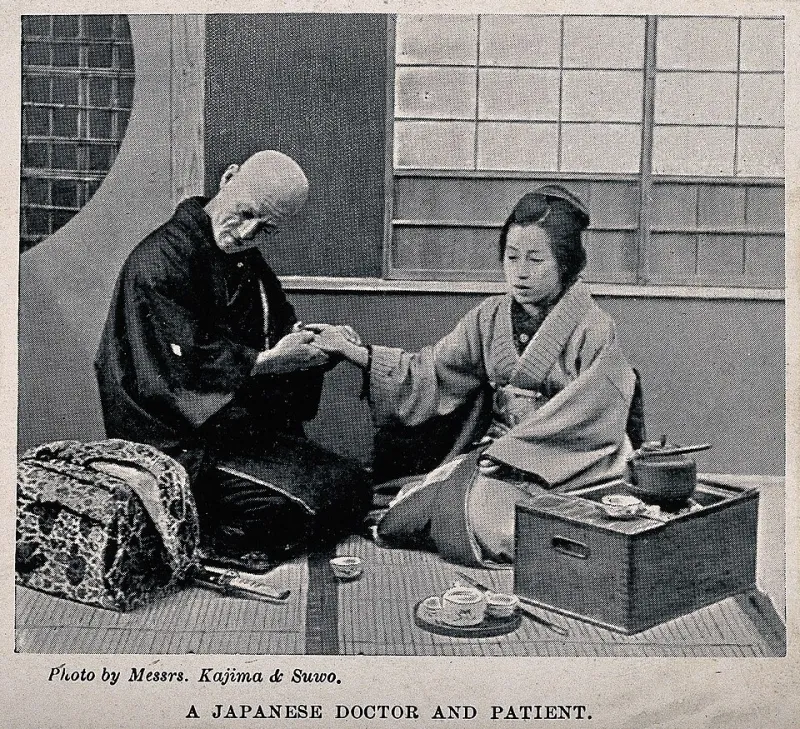
Photo: Unknown, CC BY 4.0, via Wikimedia Commons
The Uncomfortable Truth About Patient Satisfaction
American healthcare, broadly speaking, has absorbed a consumer mindset. Satisfaction surveys, online reviews, and the ever-present threat of a one-star rating have subtly — and sometimes not so subtly — reshaped how physicians interact with their patients. In aesthetic medicine, where the product being sold is appearance itself, this pressure reaches its most concentrated form. The result is a quiet epidemic of doctors who say yes when the most ethical, medically sound, and genuinely caring answer would be no.
This is not a minor inconvenience. It is a structural problem that affects outcomes, erodes trust, and — over years and multiple procedures — can fundamentally alter a person's face in ways they never intended and may struggle to reverse.
At Aoki Aesthetic Clinic, the philosophy we operate from is rooted in Japanese medical tradition: precision, restraint, and an unwavering commitment to the patient's authentic long-term wellbeing over their momentary request. That philosophy requires, at times, that we decline to perform procedures our patients ask for. Understanding why we do this — and why you should seek out a clinic willing to do the same — may be the most important thing you read before scheduling an aesthetic consultation.
How the Culture of 'Yes' Took Hold
The shift did not happen overnight, and it did not happen through malice. Most aesthetic physicians entered the field because they genuinely want to help people feel confident and well. But several forces converged to create an environment in which saying yes became the default.
First, the expansion of medical spas and cosmetic procedure chains introduced competitive pricing pressure. When a patient can book a filler appointment online with next-day availability at a competing clinic across town, the temptation to accommodate every request rather than risk losing a client becomes commercially significant. Second, the proliferation of before-and-after content on social media has given patients a visual vocabulary of procedures they arrive having already decided they want. Declining that request can feel, to both parties, like an act of withholding rather than an act of care.
Third — and perhaps most insidiously — aesthetic outcomes are often not immediately visible. A face that has received too much filler volume over three years does not look obviously overfilled on the day of the third appointment. The cumulative effect only becomes apparent later, when the tissue has changed, the product has migrated, and the correction required is far more complex than any individual treatment was.
The doctor who said yes each time may have received positive reviews at every appointment. The damage, when it arrived, came quietly.
What Restraint Actually Looks Like in Practice
Consider a patient who presents requesting lip augmentation. She has brought photographs of a result she admires — a significantly fuller upper lip with a pronounced cupid's bow. Her own lip anatomy, however, involves a naturally flat philtrum and limited tissue volume. Achieving the result she wants would require an amount of product that would, given her specific facial proportions, create an outcome that conflicts with her other features rather than harmonizing with them.
A physician operating under commercial pressure says yes, proceeds carefully within what they consider reasonable limits, and schedules a follow-up. A physician operating under a philosophy of genuine restraint explains — in specific, anatomical terms — why the requested result would not serve her, what result would serve her, and then allows her to decide how to proceed with that honest information in hand.
The second conversation is longer. It sometimes ends without a scheduled procedure. It requires the physician to tolerate the possibility that the patient will leave feeling disappointed or misunderstood. But it is also the only conversation that treats the patient as an adult whose long-term face matters more than today's appointment.
Japanese aesthetic philosophy has a concept embedded in its approach to craft: ma, the meaningful space between actions. In medicine, this translates to the deliberate pause before intervention — the recognition that doing less, or doing nothing, is itself a skilled and intentional choice.
The Case Studies That Changed How We Think About Compliance
Clinical literature on aesthetic complications consistently identifies a pattern: the patients who experience the most significant long-term issues are rarely those who received one poorly executed procedure. They are, more often, patients who received multiple well-executed procedures that were individually reasonable but collectively excessive — and whose physicians never paused to assess the cumulative picture.
A patient receiving neurotoxin treatments every three months over five years may develop a facial expression that reads as flat or mask-like, not because any single treatment was performed incorrectly, but because no one stepped back to evaluate whether continued treatment at that frequency remained appropriate. A patient who has received volume restoration in the cheeks, temples, and jawline over two years may begin to notice a heaviness or roundness that was not there before — again, not from error, but from accumulation without reassessment.
The clinics that catch these trajectories early are the ones where physicians feel empowered — indeed, professionally obligated — to say: we should pause, reassess, and consider whether the next step is the right one. That conversation requires institutional courage. It is easier, financially and interpersonally, to simply proceed.
How to Identify a Physician Who Will Tell You the Truth
For patients navigating the American aesthetic medicine market, identifying a physician willing to say no requires some deliberate effort. A few signals are worth watching for during a consultation.
First, observe how the physician handles your stated goals versus your actual anatomy. A physician who immediately validates your request and begins discussing product options without a thorough facial assessment is not operating from a diagnostic framework — they are operating from a sales framework. The two are not the same.
Second, pay attention to whether the physician volunteers limitations. Does your provider explain what a procedure cannot achieve, or only what it can? Honest communication about the boundaries of aesthetic medicine is a marker of clinical maturity.
Third, consider the pacing of your consultation. A physician who completes a consultation in eight minutes and has a treatment plan ready before you have finished describing your concerns has not assessed you — they have processed you. Genuine evaluation takes time.
Finally, notice whether your physician ever suggests not doing something. A recommendation to wait, to monitor, or to forgo a procedure you requested is not a failure of service. It is the highest expression of clinical responsibility.
The Long View Is the Only View That Matters
At Aoki Aesthetic Clinic, we approach every consultation with the understanding that we are not managing a single appointment — we are participating in the long arc of how a person's face ages, changes, and is cared for over decades. That responsibility cannot be discharged by simply fulfilling each request as it arrives.
The Japanese aesthetic tradition that informs our practice is built on a recognition that beauty is not the product of accumulation. It emerges from precision, proportion, and the disciplined removal of excess. In practical terms, this means that our physicians will sometimes recommend less than you expected, or suggest that the best course of action is to wait. It means that a consultation with us may not end with a scheduled procedure.
We consider that outcome — when it is the right one — to be a success.
The clinics that tell you yes to everything are not serving you. They are serving their schedules. The measure of a genuinely excellent aesthetic physician is not the breadth of what they are willing to do, but the integrity of the judgment they bring to every decision — including the decision to do nothing at all.