The Window You Don't Know You Have: Why Your Early Thirties Are the Most Consequential Years in Aesthetic Medicine

American cosmetic culture is built on a reactive model. You wait. Something changes visibly. You seek treatment to address what has changed. This sequence feels logical — why intervene before there is something to intervene on? — and it is, in clinical terms, almost entirely backwards.
The most consequential decisions in a person's long-term aesthetic trajectory are not made in their forties, when the structural changes are obvious and the correction impulse is strongest. They are made — or not made — in the early thirties, when the changes are subtle, the structural architecture is still largely intact, and the opportunity to work with the face's natural evolution rather than against it is at its highest.
At Aoki Aesthetic Clinic, this is not a marketing position. It is a clinical one, grounded in what we understand about the biology of facial aging and the compounding logic of preventive intervention.
What Actually Happens Between 30 and 35
The thirties are commonly described as a time when aging "begins" — but this framing misrepresents what is actually occurring. Aging, in the biological sense, began in the mid-twenties. What happens in the early thirties is that the cumulative effects of those initial changes reach a threshold of clinical relevance.
Collagen synthesis, which begins declining at approximately 1% per year in the mid-twenties, has by the early thirties produced a measurable reduction in dermal density. The facial fat compartments — which provide the volumetric scaffolding of youthful facial contour — begin their slow downward migration. Bone remodeling, a process that continues throughout life, begins to subtly alter the skeletal support underlying the soft tissue.
Critically, none of these changes are yet severe. The face at 32 is structurally sound. The architecture is intact. This is precisely what makes it the optimal moment for intervention — not because the face needs correction, but because it is still close enough to its peak structural state that supporting it requires minimal clinical input.
The analogy that serves us well here is structural maintenance. A building maintained regularly never requires the kind of intervention that a building left unattended for decades does. The same principle governs facial architecture.
The Compounding Logic of Early Intervention
Prevention in aesthetic medicine is not simply about looking younger for longer. It is about the mathematical logic of compounding: small investments made early produce returns that large investments made late cannot replicate.
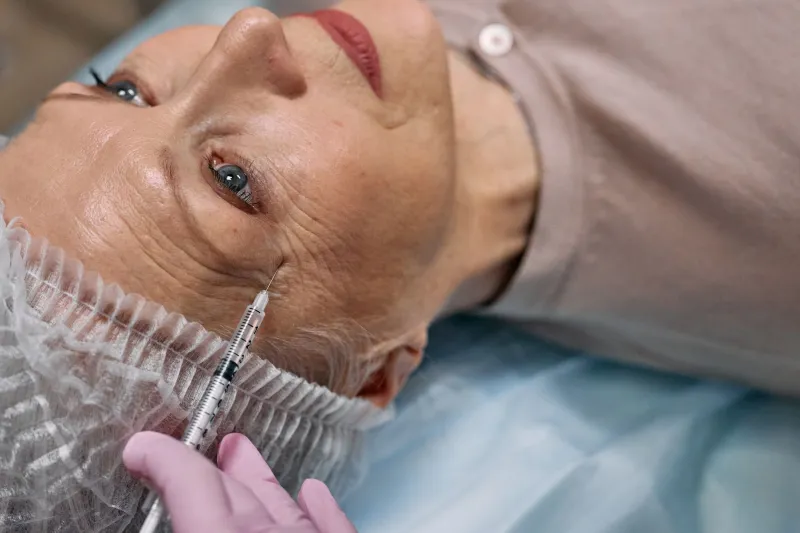
Consider the role of neurotoxin in the early thirties. A patient who begins conservative, targeted treatment for dynamic lines in their early thirties — before those lines have transitioned from dynamic (present only during expression) to static (present at rest) — is not simply delaying the appearance of those lines. They are altering the mechanical process by which those lines would have deepened. The repeated muscular contraction that etches dynamic lines into static ones is interrupted at the source, before the structural remodeling of the dermis has occurred.
The same logic applies to skin quality interventions. Retinoids, prescription-strength vitamin C formulations, and periodic resurfacing treatments initiated in the early thirties work on skin that still has robust cellular turnover capacity. The same treatments applied a decade later are working against a more significantly compromised baseline — they produce results, but those results require more effort to achieve and more maintenance to sustain.
Volume preservation follows a parallel principle. The earliest and most clinically impactful approach to facial volume loss is not replacement — it is slowing the rate of loss through treatments that support the structural integrity of fat compartments before significant atrophy has occurred. Once a fat compartment has substantially deflated, restoring it requires filler volumes that can, if not expertly calibrated, alter the face's proportional relationships in ways that careful early preservation would have avoided entirely.
What Prevention in Your Thirties Actually Looks Like
It is important to be precise about what early intervention means in practice, because the term is frequently misapplied — used to justify aggressive or premature treatment under the cover of prevention.
At Aoki, a prevention-focused consultation for a patient in their early thirties typically begins with a comprehensive structural assessment. We examine the quality and behavior of the skin, the distribution and volume of facial fat, the skeletal proportions, and the dynamic patterns of facial expression. From this foundation, we identify not what is visibly wrong but what is beginning to shift — and what, if supported now, will maintain its integrity over the decade ahead.
For many patients in this age group, the clinical recommendations are modest: a refined skincare protocol, sun protection counseling, perhaps a conservative neurotoxin treatment focused on one or two high-priority expression zones. Some patients may benefit from a small volume of biostimulator — not to replace volume that has been lost, but to support the collagen architecture in areas where early laxity is beginning to emerge.
What a prevention-focused consultation for a thirty-two-year-old does not look like is a full treatment menu. Patients who arrive at Aoki in their early thirties often leave with fewer scheduled procedures than they anticipated — because the most appropriate clinical recommendation at this stage is targeted, not comprehensive.
The Cost of Waiting
The reactive model — waiting for visible aging before seeking treatment — is not without consequences. Those consequences are not primarily cosmetic. They are clinical.
A face treated in its mid-forties after a decade of unmanaged structural change requires a fundamentally different approach than a face supported through its thirties with appropriate preventive care. The forties face may need volume restoration in multiple compartments simultaneously, which introduces complexity around proportional balance. It may require resurfacing treatments on skin that has accumulated significant photodamage. The neurotoxin work must navigate lines that have already transitioned to static, which is a more constrained clinical problem.
None of this is impossible to address. Aesthetic medicine has sophisticated tools for patients who come to it later. But the results are necessarily corrective rather than preservative — and correction, however technically excellent, is a different kind of outcome than a face that has been thoughtfully accompanied through its natural evolution.
Starting the Right Conversation
For Americans in their early thirties who have not yet engaged with aesthetic medicine — or who have engaged with it only in reactive, event-driven ways — the most valuable first step is not a treatment. It is a consultation oriented around the question: where is my face heading, and what would it mean to support that journey intelligently?
This question does not lead to a procedure list. It leads to a philosophy — one in which the face is understood as a living structure with its own arc, and the physician's role is to accompany that arc with precision, restraint, and genuine attention to the individual.
The window between 30 and 35 is not a deadline. But it is a genuinely consequential opportunity — one that, once passed, cannot be fully recovered.
The most sophisticated thing a patient in their early thirties can do is walk into that opportunity with their eyes open.