Decade by Decade: How Your Facial Architecture Changes — and Why It Matters More Than Your Age
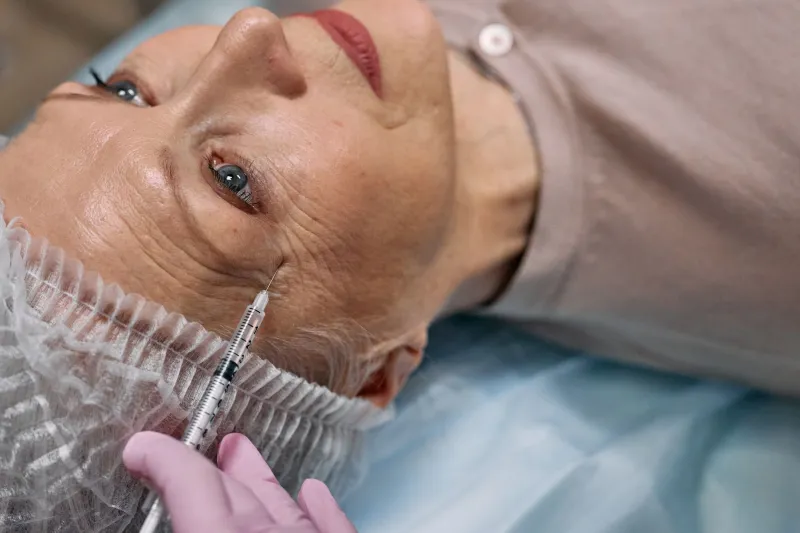
Age, as a clinical variable, is one of the least useful numbers in aesthetic medicine. A patient's chronological age tells a physician relatively little about the actual state of their face. Two patients who are both 48 years old may present with radically different structural profiles — one with significant bone resorption and early soft tissue descent, the other with largely intact volume and only surface-level skin changes. Treating them identically because they share a birth year would be a clinical error.
What matters far more than age is architecture: the specific configuration of bone, fat, and skin that makes each face unique — and the predictable ways that configuration evolves over time. At Aoki Aesthetic Clinic, we approach facial aging not as a single condition to be treated but as a multi-layered process to be understood. That understanding begins with the structures themselves.
The Three-Layer Framework
Facial aging occurs simultaneously across three anatomical layers, and changes in each layer interact with and amplify changes in the others.
The skeletal layer provides the scaffold upon which everything else is built. Bone is not static — it undergoes continuous remodeling throughout life, and from approximately the mid-thirties onward, resorption begins to outpace new bone formation in predictable regions. The orbital rim widens and deepens, creating the appearance of a hollowed eye socket. The pyriform aperture — the bony opening around the nose — expands, contributing to the flattening of the midface and the lengthening of the upper lip. The angle of the jaw becomes less defined. These are structural changes, invisible to the naked eye but responsible for much of what we perceive as the 'look' of an aging face.
The fat compartment layer is where much of the visible drama of aging unfolds. The face contains distinct, anatomically bounded fat compartments — in the cheeks, along the temples, beneath the eyes, around the mouth — that do not behave as a single unit. Some compartments deflate; others descend; still others may actually increase in volume while adjacent compartments shrink. The net effect, by the mid-forties in most patients, is a redistribution of facial volume that creates hollows where fullness once existed and fullness where definition once prevailed.
The skin and soft tissue layer is what patients most readily observe in the mirror. Collagen and elastin production declines from the late twenties onward, accelerating meaningfully after menopause in women. Skin thins, loses resilience, and becomes more susceptible to the effects of the structural changes happening beneath it. Surface changes — fine lines, textural irregularity, pigmentation shifts — are in many cases the visible expression of deeper architectural change.
The Twenties: Establishing the Baseline
For most people, the twenties represent peak structural integrity. Bone density is high, fat compartments are full and well-positioned, and skin elasticity is at its maximum. Changes during this decade are almost entirely surface-level: early fine lines from repeated expression, initial signs of sun damage in those without consistent UV protection, and the very beginning of collagen depletion.
From a clinical standpoint, the twenties are not a decade for treatment — they are a decade for documentation and education. A baseline assessment during these years creates the clinical record against which all future change will be measured. It also identifies any structural tendencies worth monitoring: a naturally flatter midface that may be prone to earlier volume loss, an orbital area with thin overlying skin that will require particular attention to sun protection, a jawline with limited bony projection that will benefit from earlier structural support.
The Thirties: The Decade of Transition
The thirties are where clinical divergence begins. For some patients, this decade remains relatively quiet — minor textural changes, perhaps the beginning of nasolabial fold definition, a slight softening of the jawline. For others, particularly those with certain structural profiles or significant cumulative sun exposure, the thirties bring more visible change.
Key clinical observations in this decade include the first signs of fat compartment descent in the midface, early hollowing beneath the eyes as the tear trough becomes more defined, and the initial deepening of the nasolabial fold as the cheek fat pad begins to migrate inferiorly. These are not catastrophic changes, but they are the beginning of a structural shift that will compound over the following decades if not understood and addressed strategically.
This is also the decade in which lifestyle factors begin to express themselves structurally. Patients with a long history of significant weight fluctuation may show earlier fat compartment instability. Those with chronic sleep disruption often display accelerated periorbital changes. Smoking accelerates collagen breakdown with measurable clinical effect.
The Forties: Volume, Descent, and the Structural Shift
The forties represent the decade in which most patients first seek aesthetic consultation — and also the decade in which the three-layer framework becomes most clinically relevant. Skeletal resorption is now measurable in its effects. Fat compartment descent has progressed from subtle to visible. Skin laxity begins to compound the structural changes beneath it, creating the characteristic features of midlife facial change: the deepened nasolabial fold, the early jowl, the flattening of the cheek, the hollowing of the temple.
What is critical to understand in this decade is that these changes are structural, not purely surface. A patient who arrives at 44 requesting treatment for 'sagging cheeks' and receives only a skin-tightening procedure has received an incomplete response to a three-layer problem. Addressing laxity at the skin level without acknowledging the volume loss and skeletal change driving it produces results that are temporary at best and distorting at worst.
The Fifties and Beyond: When the Framework Shifts Entirely
By the mid-fifties, the clinical picture has changed enough that treatment strategies appropriate for the forties may be genuinely contraindicated. A patient who benefited from volume augmentation at 42 may find that the same approach at 54 produces a result that reads as heavy rather than youthful — because the skeletal support that once held that volume in place has itself changed.
This is the most important clinical principle in long-term aesthetic planning: the aging face is not simply an older version of the younger face. It is a structurally different entity, with different needs and different responses to intervention. A physician who treats a 55-year-old patient using the same framework they would apply to a 38-year-old is not adapting to the clinical reality in front of them.
In the fifties and sixties, successful aesthetic medicine requires a thorough reassessment of the entire structural landscape — not a continuation of whatever approach was used in the previous decade. Volume that was appropriate earlier may need to be redistributed rather than added. Skin procedures that were sufficient in the forties may need to be combined with structural support to address the skeletal component of change. The strategy must evolve because the face has evolved.
Why This Knowledge Belongs to the Patient
Understanding the mechanics of your own facial aging is not simply an academic exercise. It is a tool for more productive conversations with your physician, more realistic expectations about what any given procedure can accomplish, and a more coherent long-term strategy for how you want to age.
At Aoki Aesthetic Clinic, we believe that patients who understand their own structure — who know which compartments are most likely to change first, which decades represent their greatest structural vulnerability, and why the approach that worked at one age may be wrong at another — are the patients who make the best decisions. Knowledge, applied early and updated regularly, is the most durable aesthetic investment available.