What Midlife Aesthetics Gets Wrong: Rethinking What's Achievable After 40
There is a particular kind of self-editing that happens before many women ever step into a consultation room. By the time they arrive, they have already decided what they are allowed to want. They have mentally crossed things off the list — not because a physician told them to, but because culture, comparison, and years of quietly absorbing other people's results have done that work for them.
This is one of the more consequential and least-discussed dynamics in aesthetic medicine. And it disproportionately affects women in midlife.
The Ceiling Women Build Before Anyone Else Does
The assumptions tend to arrive in fragments. A friend's procedure that looked overdone. A magazine article warning against trying too hard. A decade of hearing that aging gracefully means accepting what comes. Individually, none of these form a philosophy. Collectively, they create one — a quiet but firm belief that aesthetic medicine past forty is either futile or dangerous, that the window for meaningful results has narrowed considerably, or that anything pursued now will register as effort rather than ease.
What is striking, in practice, is how often these beliefs go unexamined. Patients present not with open questions but with pre-negotiated conclusions. They ask about softening one line, not about what a comprehensive approach might accomplish. They accept a partial solution because they have already decided that a fuller one is not realistic for someone their age.
The first thing a thoughtful consultation should do is gently disrupt that framework.
Why Japanese Aesthetic Philosophy Approaches This Differently
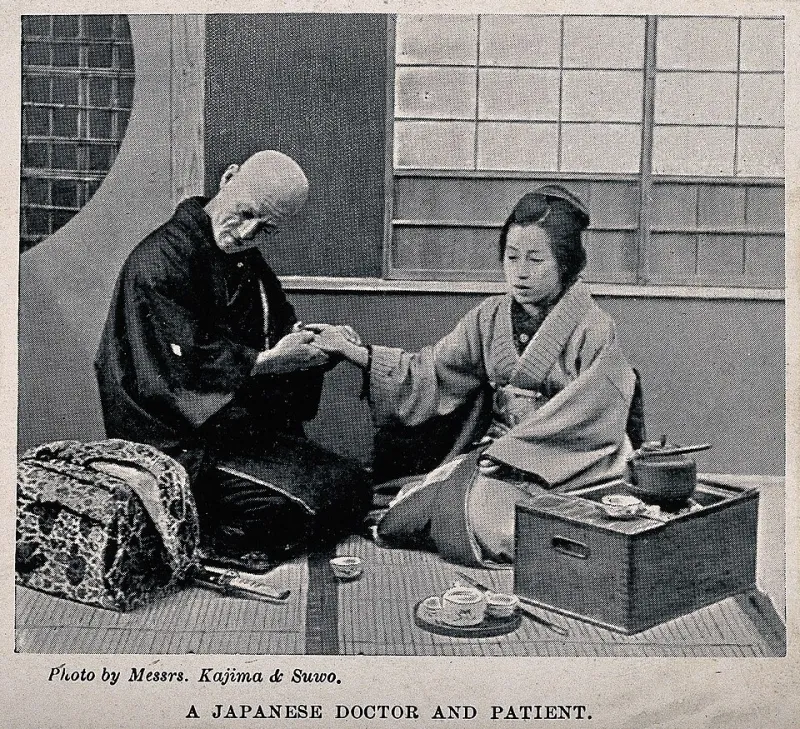
Japanese aesthetic medicine does not organize itself around reversal. This is a meaningful distinction. Where much of American cosmetic culture frames aging as a problem to be corrected — lines to be erased, volume to be restored, time to be turned back — the Japanese approach tends to ask a different question: what does this individual's face need in order to look most like itself, at its best?
The emphasis falls on refinement rather than renovation. On working with the structure a patient has, not against the years she has lived. This is not a softer ambition — it is, in many respects, a more exacting one. It requires a precise understanding of how the face has changed, which changes are worth addressing, and which interventions will produce harmony rather than disruption.
For women over forty, this framing is quietly liberating. It removes the implicit competition with a younger version of oneself and replaces it with a more honest and often more achievable goal: looking well, looking rested, looking like a person who has taken care of herself. These are not consolation prizes. In skilled hands, they represent a genuine and lasting aesthetic outcome.
What Outdated Results Have Cost a Generation of Patients
A significant portion of the reluctance women bring to aesthetic consultations in midlife is rooted in what they have seen — and when they saw it. The results that defined public perception of cosmetic procedures a decade or two ago were frequently the product of techniques and materials that have since been substantially refined. The pulled appearance associated with older facelift approaches. The frozen expressions that once followed aggressive neurotoxin use. The overfilled faces that became a cautionary shorthand for aesthetic excess.
These images remain vivid in cultural memory long after the practices that produced them have evolved. Contemporary techniques — including the more conservative and anatomy-respecting approaches that characterize Japanese aesthetic medicine — bear little resemblance to those earlier outcomes. But many patients are still making decisions based on what they observed years ago, in some cases decades ago, without accounting for how significantly the field has changed.
This is worth naming directly in any honest consultation. A patient who has self-selected away from a treatment because of results she witnessed in 2005 may be declining something that looks entirely different in 2025.
The Consultation as a Recalibration
A proper aesthetic consultation does not simply confirm what a patient has already decided she wants. It functions as a recalibration — an opportunity to examine assumptions, introduce options that were not previously on the table, and build a picture of what is genuinely achievable given the patient's anatomy, history, and goals.
For women in midlife, this often means addressing the gap between what they think they can pursue and what a physician actually observes as addressable. Skin quality concerns that seemed intractable may respond well to a structured treatment sequence. Volume loss that a patient has accepted as permanent may be approachable in ways that look entirely natural. Concerns that feel major from the inside may be minor to an experienced eye — and vice versa.
The goal is not to overwhelm a patient with possibilities or to manufacture ambition where none exists. It is to ensure that any decision she makes is genuinely informed — that she is choosing from an accurate menu, not a self-edited one.
Aging Gracefully Is Not the Same as Aging Passively
There is a version of the "aging gracefully" conversation that serves women well. It is the one that encourages self-acceptance, discourages the pursuit of an impossible standard, and honors the dignity of a face that has lived a full life. This is a valuable cultural corrective, particularly in a media environment that has long treated visible aging as a failure.
But there is another version that functions as a polite way of telling women not to want too much. That asking for help past a certain age is vain, or futile, or somehow incompatible with a mature self-image. This version is less helpful — and considerably less accurate.
Seeking aesthetic care at forty, fifty, or beyond is not a contradiction of graceful aging. It is, in many cases, an expression of it. The decision to invest in one's appearance thoughtfully, with realistic goals and appropriate medical guidance, is consistent with the same care and intentionality that defines other aspects of how many women at this stage of life approach their health.
What a First Conversation Can Change
The value of an initial consultation, for a woman who has spent years quietly narrowing her own sense of what is possible, is not primarily in the treatment plan it produces. It is in the conversation itself — the experience of having her concerns heard without judgment, her assumptions examined without pressure, and her options presented without an agenda.
At Aoki Aesthetic Clinic, we approach these conversations with the understanding that what a patient brings into the room is as important as what she leaves with. The questions she has been afraid to ask are often the most useful ones. The goals she has written off as unrealistic are frequently worth revisiting.
Midlife is not the end of the aesthetic conversation. For many women, it is where the most meaningful part of it begins.