What Clinics That Promise Perfection Are Actually Telling You About Themselves
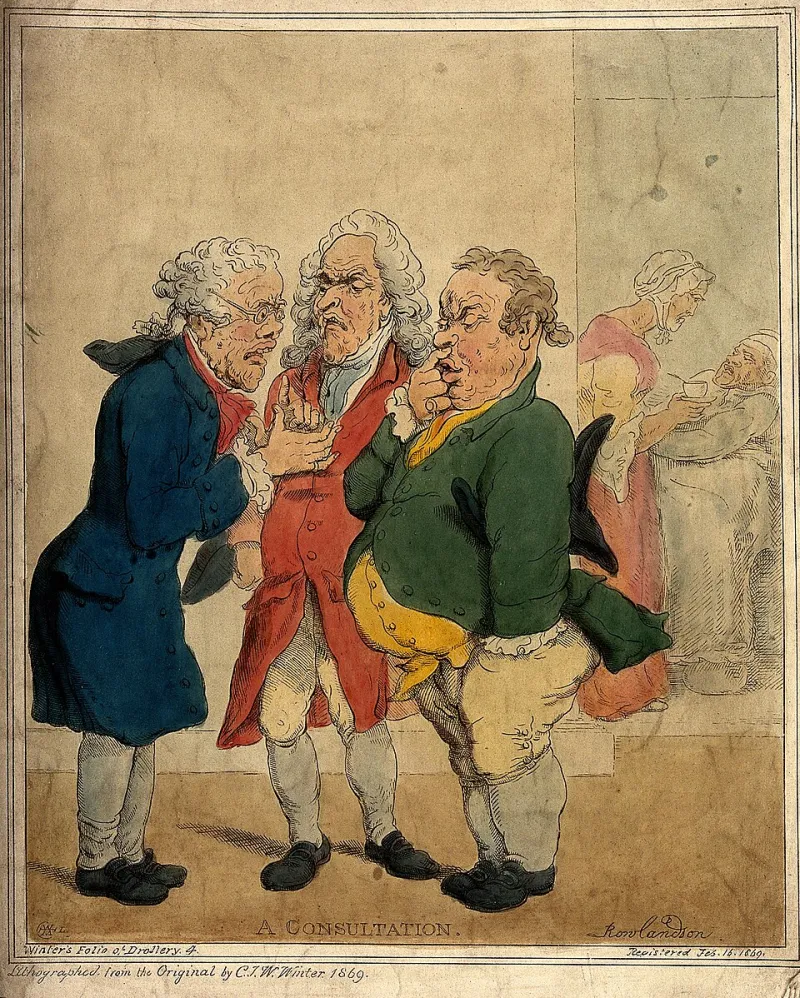
Photo: Unknown, CC BY 4.0, via Wikimedia Commons
The most revealing moment of any aesthetic consultation rarely involves a mirror, a diagram, or a price list. It happens in language — specifically, in the words a provider chooses when describing what they can do for you.
Promises of perfection, flawlessness, or transformation sound appealing. They are also, almost without exception, a warning sign.
At Aoki Aesthetic Clinic, our consultations are deliberately grounded in a different vocabulary: one of harmony, proportion, and enhancement. That choice is not incidental. It reflects a foundational philosophy — one shaped by Japanese aesthetic tradition — that views the human face not as a problem to be corrected, but as a living composition to be refined with care.
Understanding why that distinction matters can help you evaluate any clinic, anywhere.
The Language of Perfection Is a Sales Tool, Not a Medical Standard
Consider two versions of the same consultation moment. A prospective patient asks about addressing hollowness beneath the eyes. One provider responds: "We can completely eliminate that — you'll look ten years younger and your eyes will be perfect." Another responds: *"We can restore volume in a way that softens that shadow and brings the eye area into better balance with your overall features."
The first response feels more satisfying. It is also clinically dishonest.
Perfection is not a medical outcome. It is a marketing concept. No injectable, laser, or surgical procedure produces perfection, because perfection — as a static, idealized state — does not exist in living anatomy. Faces move. Skin ages. Results evolve. A provider who promises otherwise either does not understand this or has chosen to set it aside in favor of closing a sale.
The second response, by contrast, describes what aesthetic medicine can actually accomplish: a meaningful improvement calibrated to the individual, delivered within the limits of what is safe and sustainable.
Why Harmony Is the More Honest Promise
Japanese aesthetic philosophy has long held that beauty is not found in the elimination of all irregularity, but in the considered relationship between elements. The concept of ma — the meaningful use of space and proportion — suggests that what surrounds a feature is as important as the feature itself. Nothing is viewed in isolation.
Applied to aesthetic medicine, this means that a good outcome is not one in which a single concern has been erased, but one in which the face reads as balanced and coherent. Treating under-eye hollowness without accounting for midface volume, skin quality, and the patient's natural facial architecture can produce a technically successful result that nonetheless looks wrong.
Clinics that promise perfection tend to treat features in isolation, because isolated promises are easier to make and easier to photograph. Clinics committed to enhancement understand that the face functions as a whole — and that serving the whole requires restraint as much as intervention.
Consultation Language as a Diagnostic Tool
Before committing to any provider, pay close attention to how they speak during the initial consultation. Certain phrases, however well-intentioned they may sound, deserve scrutiny.
"You'll look completely different." Transformation is not inherently the goal of aesthetic medicine. If a provider frames dramatic change as the benchmark of success, ask yourself whether that aligns with what you actually want — and whether it reflects a realistic understanding of what procedures can achieve.
"We can fix that." The word fix implies that something is broken. Ethical aesthetic providers do not pathologize normal variation. They assess whether a specific concern can be meaningfully addressed and communicate honestly about the degree of change that is possible.
"This will make you look perfect / flawless / like a different person." These phrases prioritize a fantasy over a clinical assessment. They also transfer the definition of success to an abstract ideal rather than to the patient's own considered goals — which means the provider, not the patient, controls whether the outcome is deemed satisfactory.
By contrast, phrases worth trusting tend to sound more measured: "This can soften the appearance of..." or "We'd approach this gradually to see how your features respond" or *"There are limits to what this treatment can accomplish, and here's what we'd realistically expect."
That last phrase — an honest acknowledgment of limits — is perhaps the most trustworthy thing a provider can say.
The Clinic That Says Less Is Often Offering More
In American aesthetic culture, enthusiasm is often read as competence. A provider who speaks confidently about dramatic results can feel more reassuring than one who hedges, qualifies, and sets careful expectations. This intuition is understandable — but it frequently leads patients toward exactly the wrong providers.
The most skilled aesthetic physicians tend to be the most measured in their promises. This is not timidity. It is the product of experience — of having seen enough cases to understand that outcomes are variable, that anatomy does not always cooperate, and that a patient's satisfaction depends not only on the result but on how well their expectations were prepared.
At Aoki Aesthetic Clinic, consultations are structured to ensure that patients leave with a clear and honest understanding of what treatment can and cannot accomplish for them specifically. If a requested outcome falls outside what we can deliver safely and naturally, we say so. We consider that conversation — the one where we redirect, limit, or decline — to be among the most important services we offer.
What to Ask Before You Commit
If you are evaluating a new provider, a few direct questions can quickly clarify their orientation:
- What result would you consider realistic for someone with my anatomy and concerns?
- What are the limitations of this treatment in my case specifically?
- How would you describe a successful outcome — and how would you define falling short?
A provider committed to honest enhancement will engage these questions thoughtfully. A provider oriented toward perfection promises will often deflect them, pivot to before-and-after photos, or reassure you that concerns are unnecessary.
Trust the discomfort that follows that reassurance. It is your instincts recognizing something the language was designed to obscure.
Enhancement Is the Higher Standard
The Japanese aesthetic tradition does not pursue the elimination of the human. It pursues the refinement of what is already present — the careful attention that reveals rather than replaces. Applied to cosmetic medicine, that philosophy produces a different kind of consultation, a different kind of treatment, and ultimately a different kind of result: one that looks like you, only more rested, more balanced, more at ease in your own face.
That is what enhancement means. And it is, by any honest measure, more valuable than perfection.
When a clinic promises the latter, they are not raising the standard. They are avoiding it.