When the Request and the Need Are Not the Same Thing: What Skilled Aesthetic Physicians Actually Hear
There is a particular moment in aesthetic consultations that separates competent practitioners from genuinely skilled ones. It arrives quietly, usually within the first few minutes, when a patient states what they want — and the physician recognizes that the stated desire and the underlying clinical need point in entirely different directions.
This is not a small distinction. Acting on the request without addressing the need is one of the most common sources of patient dissatisfaction in aesthetic medicine. And yet, in clinics that prioritize speed and volume over thoroughness, the gap between the two is rarely examined at all.
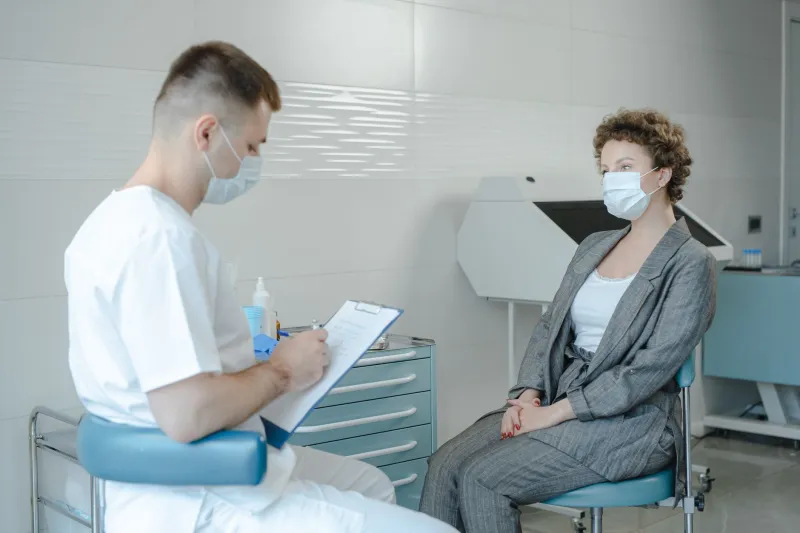
At Aoki Aesthetic Clinic, the consultation is not a transaction. It is a diagnostic process — one that takes the patient's stated concern seriously as a starting point, while remaining rigorously attentive to what the face itself is communicating.
The Anatomy of a Misaligned Request
Consider a patient in her mid-thirties who schedules a consultation specifically requesting lip filler. She has noticed that her lips appear thinner than they once did and has seen results she admires on social media. Her request is coherent, her reasoning is understandable, and her aesthetic goal — a more defined, youthful perioral area — is entirely legitimate.
But when the physician examines her face in full, a different picture emerges. Her lips themselves are proportionate. The issue creating the appearance of diminishment is not lip volume at all — it is mild but progressive jawline laxity and early midface volume loss, both of which are causing the lower third of her face to soften. Adding volume to the lips without addressing these structural factors would not only fail to achieve her goal; it could create a visual imbalance that draws more attention to the very area she wants to improve.
This is the consultation paradox in its most instructive form. The patient has correctly identified a problem. She has simply misidentified its source.
Why This Happens So Consistently
Patients are not wrong to arrive with specific requests. They are doing what any reasonable person does: observing a change, forming a hypothesis about its cause, and proposing a solution. The problem is that the human face is a system of interdependent structures, and changes in one area frequently produce visual effects that appear to originate somewhere else entirely.
Skin laxity along the jawline reads as lip thinning. Volume loss in the temples reads as under-eye hollowing. Brow descent reads as upper eyelid heaviness. In each case, a patient who focuses on the visible symptom rather than the structural cause will naturally request a treatment that addresses the wrong variable.
This is not a failure of perception — it is a predictable consequence of viewing one's own face in two dimensions, in fragments, and almost always in suboptimal lighting. The physician's role is to see the face as a three-dimensional, dynamic structure — and to translate that clinical view into a recommendation the patient can understand and trust.
A Second Scenario: When Botox Is the Wrong Starting Point
Another instructive pattern involves patients seeking neurotoxin treatment for lines and wrinkles that are, on closer examination, primarily a skin quality issue rather than a muscle activity issue.
A patient in his late forties presents with concern about horizontal forehead lines and requests Botox. The lines are real and visible. But during examination, the physician notes significant surface textural irregularity, uneven tone, and reduced dermal density — signs that the skin itself has lost resilience independent of muscular movement. Relaxing the frontalis muscle will soften the lines when the face is at rest, but it will not address the underlying skin condition. The result, if treatment proceeds without a broader skin health conversation, is likely to be underwhelming — and the patient will be left wondering why the procedure did not deliver what he expected.
The more complete answer involves a conversation about skin quality restoration: whether through medical-grade topical protocols, resurfacing treatments, or a combination approach that addresses both the surface and the deeper structural contributors. Neurotoxin may still be part of that plan — but it is not the foundation.
The Diagnostic Discipline Behind the Conversation
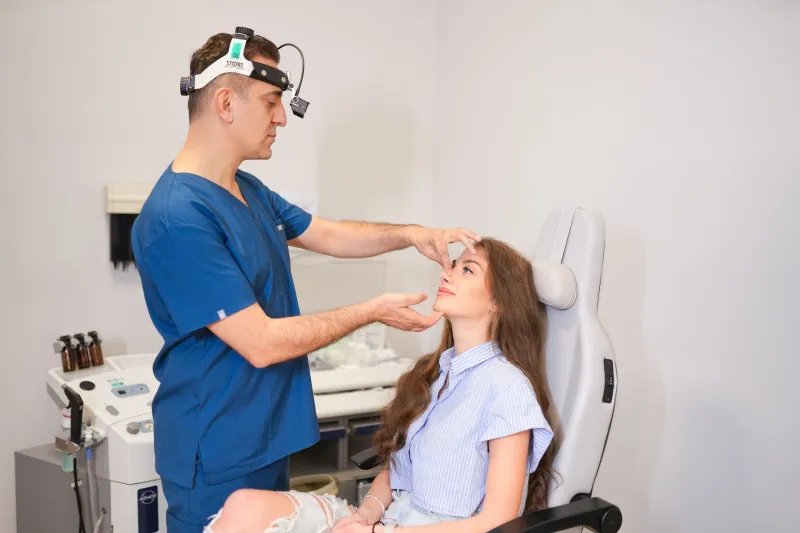
In Japanese aesthetic medicine, the principle of mitsumeru — roughly translated as attentive, sustained observation — informs how physicians approach the consultation from the moment a patient enters the room. Before a single clinical question is asked, the physician is already gathering information: how the face moves during natural conversation, where light and shadow fall, how posture affects the perceived contours of the neck and lower face.
This discipline is not about overriding the patient's wishes. It is about ensuring that those wishes are pursued through the most effective and appropriate means available. A patient who wants to look refreshed deserves a physician who has identified what is actually creating the appearance of fatigue — not one who has simply agreed to the first treatment mentioned.
The conversation that follows this kind of observation is, by necessity, more complex than a simple approval or denial of a request. It requires the physician to explain what they are seeing, why the patient's self-assessment may be partially or significantly off-target, and what an evidence-based treatment approach would actually look like. This takes time. It requires trust. And it occasionally means recommending less — or something entirely different — than what the patient walked in expecting.
What Patients Gain From This Approach
The immediate benefit is obvious: patients who receive treatments matched to their actual clinical needs are more likely to see meaningful, lasting results. But there is a secondary benefit that is equally important and less frequently discussed.
When a physician demonstrates the diagnostic precision to identify the gap between request and need, and communicates that finding with clarity and respect, it builds a foundation of clinical trust that changes the nature of every subsequent visit. The patient stops arriving with a predetermined answer and begins arriving with a question — which is precisely the posture that allows for genuinely individualized care.
Aesthetic medicine practiced at this level is not about fulfilling requests. It is about solving the right problem, with the right tools, in the right sequence — and having the skill and integrity to know the difference before any treatment begins.
At Aoki Aesthetic Clinic, that distinction is not incidental to our practice. It is the practice.